HEART & SOUL

The story behind the sound.

From Warsaw and Joy Division to New Order, Heart & Soul traces the people, places, eras, and decisions that turned movement into mythology.

New Order

Band Members

Bernard Sumner
Bernard Sumner

Vocals, Guitar, Keyboards

Current
Peter Hook
Peter Hook

Bass Guitar

Former
Stephen Morris
Stephen Morris

Drums, Percussion, Keyboards

Current
Gillian Gilbert
Gillian Gilbert

Keyboards, Guitar

Current
Phil Cunningham
Phil Cunningham

Guitar, Keyboards

Current
Tom Chapman
Tom Chapman

Bass Guitar

Current
Ian Curtis
Ian Curtis

Vocals (Joy Division)

Joy Division Era

Collaborators & Key Figures

David Potts
David Potts

Early collaborator

Collaborator
Anthony Wilson
Anthony Wilson

Factory Records co-founder

Key Figure
Rob Gretton
Rob Gretton

Manager (1978–1999)

Key Figure
Johnny Marr
Johnny Marr

Guest musician & collaborator

Collaborator

Related Links

New Order's Time Line
Frequently Asked Questions
Photo Gallery
Discography
Articles about New Order
External Links

When Joy Division's Ian Curtis committed suicide in May 1980 the three remaining members, Bernard Sumner (b. Bernard Dicken, 4 January 1956, Salford, Manchester, England; guitar, vocals), Peter Hook (b. 13 February 1956, Manchester, England; bass) and Stephen Morris (b. 28 October 1957, Macclesfield, Cheshire, England; drums) continued under the name New Order.

Sumner took over vocal duties and the trio embarked on a low-key tour of the USA, intent on continuing as an entity independent of the massive reputation Joy Division had achieved shortly before their demise.

Later that same year they recruited Morris's girlfriend, Gillian Gilbert (b. 27 January 1961, Manchester, England; keyboards, guitar) and wrote and rehearsed their debut, Movement , which was released the following year. Their first single, 'Ceremony', penned by Joy Division, was a UK Top 40 hit in the spring of 1981, and extended the legacy of their previous band. Hook's deep, resonant bass line and Morris's crisp, incessant drumming were both Joy Division trademarks. The vocals, however, were weak, Sumner clearly at this stage feeling uncomfortable as frontman.

Much was made, in 1983, of the band 'rising from the ashes' of Joy Division in the music press, when Power, Corruption And Lies was released. Their experimentation with electronic gadgetry was fully realized and the album contained many surprises and memorable songs. The catchy bass riff and quirky lyrics of 'Age Of Consent' made it an instant classic, while the sign-off line on the otherwise elegiac 'Your Silent Face', 'You've caught me at a bad time/So why don't you piss off', showed that Sumner no longer felt under any pressure to match the poetic, introspective lyricism of Ian Curtis.

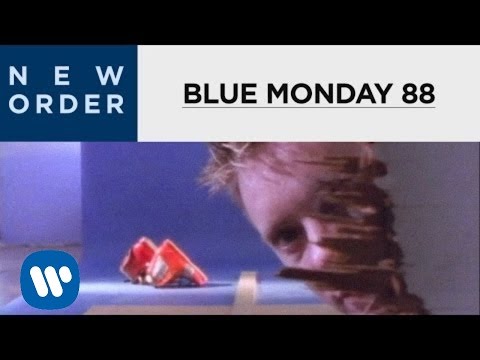
As well as redefining their sound they clearly now relished the role of 'most miserable sods in pop'. 'Blue Monday', released at this time in 12-inch format only, went on to become the biggest-selling 12-inch single of all time in the UK. In 1983 'disco' was a dirty word in the independent fraternity and 'Blue Monday', which combined an infectious dance beat with a calm, aloof vocal, was a brave step into uncharted territory. As well as influencing a legion of UK bands, it would be retrospectively regarded as a crucial link between the disco of the 70s and the dance/house music wave at the end of the 80s.

New Order had now clearly established themselves, and throughout the 80s and into the 90s they remained the top independent band in the UK, staying loyal to Manchester's Factory Records. Their subsequent collaboration with 'hot' New York hip-hop producer Arthur Baker spawned the anti-climactic 'Confusion' (1983) and 'Thieves Like Us' (1984). Both singles continued their preference for the 12-inch format, stretching in excess of six minutes, and stressing their lack of concern for the exposure gained by recording with mainstream radio in mind.

Low Life appeared in 1985 and is perhaps their most consistently appealing album to date. While the 12-inch version of Low Life 's 'Perfect Kiss' was a magnificent single, showing the band at their most inspired and innovative, the collaboration with producer John Robie on the single version of 'Subculture' indicated that their tendency to experiment and 'play around' could also spell disaster.

Their next album, 1986's Brotherhood, although containing strong tracks such as 'Bizarre Love Triangle', offered nothing unexpected. It was not until the UK Top 5 single 'True Faith' in 1987, produced and co-written by Stephen Hague hot on the heels of his success with the Pet Shop Boys , and accompanied by an award-winning Phillipe Decouffle video, that New Order found themselves satisfying long-term fans and general public alike.

The following year Quincy Jones's remix of 'Blue Monday' provided the group with another Top 5 hit. If the recycling of old songs and proposed 'personal' projects fuelled rumours of a split then 1989's Technique promptly dispelled them. The album, recorded in Ibiza, contained upbeat bass- and drums-dominated tracks that characterized the best of their early output. Its most striking feature, however, was their flirtation with the popular Balearic style, as in the hit single 'Fine Time', which contained lines such as 'I've met a lot of cool chicks, But I've never met a girl with all her own teeth', delivered in a voice that parodied Barry White 's notoriously sexist, gravelly vocals of the 70s.

Meanwhile, the band had changed significantly as a live act. Their reputation for inconsistency and apathy, as well as their staunch refusal to play encores, was by now replaced with confident, crowd-pleasing hour-long sets. In the summer of 1990 they reached the UK number 1 position with 'World In Motion', accompanied by the England World Cup Squad, with a song that earned the questionable accolade of best football record of all time, and caused a band member to observe, 'this is probably the last straw for Joy Division fans'.

Rather than exploiting their recent successes with endless tours, the group unexpectedly branched out into various spin-off ventures. Hook formed the hard-rocking Revenge, Sumner joined former Smiths guitarist Johnny Marr in Electronic and Morris/Gilbert recorded an album under the self-effacing title the Other Two.

The extra-curricular work prompted persistent rumours that New Order had
irrevocably split, but no official announcement or press admission was forthcoming. In the summer of 1991 the group announced that they had reconvened for a new album which was eventually released in 1993. Republic consequently met with mixed reviews reflecting critical confusion about their status and direction. While retaining the mix of rock and dance music successfully honed on Technique, the tone was decidedly more downbeat, even sombre. Sadly, it arrived too late to help the doomed Factory label, and afterwards the band's membership would return to varied solo projects. Hook formed Monaco in 1996.

New Order came back together in 1998 for a series of concert that ended with the 2 Temptation concerts for the new year 1999. At that moment, New Order decided to rehease Joy Division tracks and make them their own, claiming it as a lost legacy. A project called Recycle was in the air but never came true. Rob Gretton, their manager passed away in 2000 while the band was preparing their recording come back. Management duties has been then given to Andy Robinson, former tour manager, and Rebecca Boulton. Together they are Prime Management, located in Manchester.

New Order released a first track for Dan Boyle's movie The Beach, called Brutal, which was recorded at the same moment as Crystal and 60 Miles An Hour. Later in 2001, Get Ready was released and New Order scored their first Top 10 hit in many years. Get Ready saw only 2 singles coming out of it, Crystal and 60 Miles An Hour, the band decided then to finish their collaboration with the Chemical Brothers, called Here To Stay, which they decided to release as a single, and give it to the movie about the Factory history and Anthony Wilson, 24 Hour Party People.

New Order got back to studio in 2004 to record Waiting For The Sirens' Call, and they have wrote so many songs that they decided to keep the 7 left-overs to release another album in 2006.

Band Members

Bernard Sumner

Bernard Sumner

Current

Vocals, Guitar, Keyboards

Bernard Sumner is the lead vocalist, guitarist and keyboardist of New Order. He was also a founding member of Joy Division, where he played guitar. Sumner's melodic guitar work and synthesiser programming became a defining element of New Order's sound, blending post-punk with electronic dance music.

Peter Hook

Peter Hook

Former

Bass Guitar

Peter Hook is known for his distinctive high-register bass lines that serve as melodic leads throughout New Order's catalogue. A co-founder of Joy Division, his signature playing style helped define both bands' sounds. Hook departed New Order in 2007.

Stephen Morris

Stephen Morris

Current

Drums, Percussion, Keyboards

Stephen Morris joined Joy Division in 1977 and continued as New Order's drummer following Ian Curtis's death. His precise, machine-influenced drumming — often layered with electronic patterns — underpins the rhythmic drive of New Order's most celebrated records.

Gillian Gilbert

Gillian Gilbert

Current

Keyboards, Guitar

Gillian Gilbert joined New Order in 1980, shortly after the band's formation. Her keyboard and synthesiser textures added a crucial melodic layer to the band's electronic sound. She briefly stepped back from touring in 2001 but returned to the band full-time in 2011.

Phil Cunningham

Phil Cunningham

Current

Guitar, Keyboards

Phil Cunningham joined New Order in 2001, filling the guitar role vacated when Gillian Gilbert took a break. A former member of Marion, Cunningham has been an integral part of the band's live sound and studio work ever since.

Tom Chapman

Tom Chapman

Current

Bass Guitar

Tom Chapman joined New Order in 2011 following Peter Hook's departure. His bass work has supported the band's touring and recording activity throughout the 2010s and 2020s.

Ian Curtis

Ian Curtis

Joy Division Era

Vocals (Joy Division)

Ian Curtis was the vocalist and lyricist of Joy Division, the band that evolved into New Order following his death in May 1980. His intense baritone delivery and deeply personal lyrics about isolation and despair shaped the post-punk sound that the surviving members carried forward, transformed, into New Order.

Collaborators & Key Figures

David Potts

David Potts

Collaborator

Early collaborator

David Potts was an early collaborator with the band during their Warsaw / Joy Division days in Manchester, contributing to the group's formative sound before they settled on their classic lineup.

Anthony Wilson

Anthony Wilson

Key Figure

Factory Records co-founder

Anthony H. Wilson co-founded Factory Records, the Manchester label that released Joy Division and New Order's music throughout the 1980s and 90s. As a Granada Television presenter and tireless champion of Manchester's music scene, Wilson's influence on the band's career — and on Factory's legendary creative independence — was immense.

Rob Gretton

Rob Gretton

Key Figure

Manager (1978–1999)

Rob Gretton managed Joy Division and New Order from 1978 until his death in 1999, shaping the band's uncompromising approach to their career — including their refusal to release singles from albums — and their enduring association with Factory Records and The Haçienda.

Johnny Marr

Johnny Marr

Collaborator

Guest musician & collaborator

Johnny Marr, best known as the guitarist of The Smiths, has repeatedly collaborated with New Order over the years — co-writing and performing on tracks across Republic, Get Ready, and Music Complete, and joining the band on stage on several occasions.