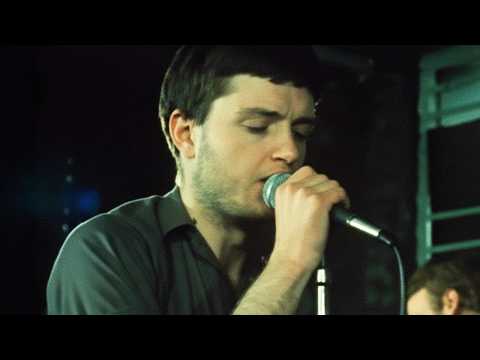
FEATURED ACT

Joy Division

Joy Division formed in Manchester in 1976 and became one of the most influential post-punk bands of their era. The group's brief but intense career ended with the death of vocalist Ian Curtis in May 1980, after which the surviving members formed [New Order](/bands/new-order).

Joy Division

  1. 1976

    Bernard Sumner and Peter Hook began forming a band after seeing the Sex Pistols in Manchester. Ian Curtis soon joined as vocalist, and the group began moving from idea to rehearsal-room reality under the name Warsaw.

  2. 1977

    The band first operated under the name Warsaw. The early line-up was unstable, with several short-term drummers passing through before Stephen Morris joined later in the year.

  3. May 1977

    Warsaw played their first concert at the Electric Circus in Manchester. At this point, the band were still raw, punk-influenced and far from the colder, more distinctive sound they would soon develop.

  4. August 1977

    Stephen Morris joined on drums after answering an advertisement. His arrival completed the classic line-up of Ian Curtis, Bernard Sumner, Peter Hook and Stephen Morris.

  5. December 1977

    The band recorded the four tracks that would become An Ideal for Living at Pennine Sound Studios in Oldham. The material still belonged to the Warsaw period, even though it would be released under the Joy Division name.

  6. January 1978

    Warsaw changed their name to Joy Division to avoid confusion with the London punk band Warsaw Pakt. The new name marked the beginning of the group's lasting identity.

  7. June 1978

    An Ideal for Living was released on the band's own Enigma label. The EP preserved their early punk sound, while tracks like No Love Lost and Leaders of Men hinted at the darker direction ahead.

  8. September 1978

    Joy Division made their television debut on Granada Reports, performing Shadowplay. The appearance connected them more closely with Tony Wilson, who would become central to the band's Factory Records story.

  9. January 1979

    Joy Division appeared on A Factory Sample, Factory Records' first release. Their tracks Digital and Glass showed the transition between the rough Warsaw sound and the more atmospheric style that would define Unknown Pleasures.

  10. April 1979

    Joy Division recorded Unknown Pleasures with producer Martin Hannett at Strawberry Studios in Stockport. Hannett's production transformed the band's live intensity into something colder, stranger and more spacious.

  11. June 1979

    Unknown Pleasures was released by Factory Records. The sleeve — a radio wave from pulsar CP 1919, designed by Peter Saville — became one of the most recognisable images in music history.

  12. October 1979

    Transmission was released as a single. It became one of the band's most important songs and captured the urgency of their live performances in a more focused studio form.

  13. March 1980

    Joy Division recorded Closer at Britannia Row Studios in London, again with Martin Hannett producing. The sessions produced a darker, more controlled and more final-sounding album than Unknown Pleasures.

  14. 2 May 1980

    Joy Division played their final concert at Birmingham University. The set included Ceremony, one of the songs that would later become part of New Order's beginning.

  15. 18 May 1980

    Ian Curtis died shortly before Joy Division were due to leave for their first North American tour. The remaining members — Bernard Sumner, Peter Hook and Stephen Morris — eventually decided not to continue as Joy Division and formed New Order.

  16. June 1980

    Love Will Tear Us Apart was released and became the band's most famous single. Its impact grew rapidly after Ian Curtis's death and helped bring Joy Division to a wider audience.

  17. July 1980

    Closer was released by Factory Records. The album became Joy Division's final studio album and cemented the band's reputation as one of the most important post-punk groups.

  18. 1981

    Still was released, collecting studio outtakes and live material. It helped preserve Joy Division's unfinished story while Sumner, Hook, Morris and Gillian Gilbert moved forward as New Order.

  19. 1988

    Substance was released, gathering singles, EP tracks and non-album material from 1977 to 1980. For many listeners, it became the easiest way to hear the full arc from Warsaw-era material to Love Will Tear Us Apart.

  20. 2007

    Control, Anton Corbijn's film about Ian Curtis and Joy Division, was released. The film renewed mainstream interest in the band and brought their story to a wider audience.

  21. 2019–2020

    Unknown Pleasures and Closer received major 40th anniversary attention with new editions and renewed coverage of their legacy. Four decades later, Joy Division's short catalogue remained central to the history of post-punk and the eventual formation of New Order.