HEART & SOUL

New Order

Born from the ashes of Joy Division, New Order reshaped what a band could be. From the stark post-punk of their earliest recordings to the electronic pulse of Blue Monday and beyond, their story traces decades of reinvention, tension, innovation and enduring influence.

NewOrderStory / Timeline

  1. 1976

    Inspired by a Sex Pistols gig at the Manchester Lesser Free Trade Hall on July 20, 1976, guitarist Bernard Sumner (also credited as "Bernard Dicken", "Bernard Albrecht" and "Bernard Albrecht-Dicken") and bass guitarist Peter Hook formed a band with friend Terry Mason, who attempted to play drums but did not last long in the band.

    They placed an advertisement in a Manchester record store and recruited singer Ian Curtis. Curtis knew Sumner, Hook, and Mason from previous gigs and was also in attendance at the Sex Pistols gig with his wife, Deborah.

  2. 1977

    April — A band called Warsaw is formed in Manchester, England. It consists of vocalist Ian Curtis, bassist Peter Hook, and guitarist Bernard Sumner (aka Bernard Albrecht).

    March — Warsaw plays its first gig at Manchester's Electric Circus. Drummer Tony Tabac joins the night of the show.

    July — After a brief touring stint, Warsaw recruits a new drummer, school chum Stephen Morris. The group records for the first time: a 7" titled An Ideal For Living. It features four cuts: "Warsaw," "No Love Lost," "Leader Of Men," and "Failure Of The Modern Man."

  3. 1978

    March — Warsaw changes their name to Joy Division.

    MayJoy Division interviewed on BBC rock music program, Saturday Rock. They bring along a new version of the An Ideal For Living EP.

    SeptemberJoy Division appears on Granada TV performing a new song, "Shadowplay."

    DecemberJoy Division signs with Factory Records, the Manchester independent label run by Tony Wilson and Alan Erasmus.

  4. 1979

    Joy Division releases their debut album Unknown Pleasures (June). The record is produced by Martin Hannett and receives critical acclaim in the British music press.

    The band embarks on extensive touring throughout the UK, building a dedicated following. Ian Curtis's epilepsy is first publicly disclosed.

  5. 1980

    From the ashes of Joy Division

    MarchJoy Division releases their second album Closer. The single "Love Will Tear Us Apart" is also released and becomes a UK hit.

    May 18Ian Curtis takes his own life, aged 23, on the eve of the band's first North American tour. Joy Division disbands.

    Late 1980 — The three surviving members — Sumner, Hook and Morris — form a new group. They recruit Morris's girlfriend, Gillian Gilbert, on keyboards. The group eventually takes the name New Order.

  6. 1981

    New Order release their debut single "Ceremony" (March) — the last Joy Division composition — which reaches the UK Top 40. Their debut album Movement follows in November.

  7. 1982

    "Temptation" is released as a 12-inch single (May), the band's first record to lean fully into synthesisers and an extended dance structure. The long form — over eight minutes in its original version — signals what would soon follow.

  8. 1983

    Blue Monday

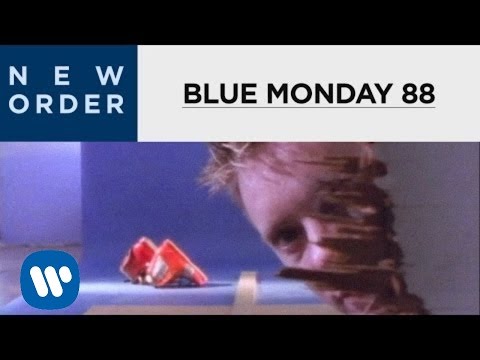
    Power, Corruption & Lies is released in May and is immediately hailed as one of the decade's essential records. It arrives without any single listed on the sleeve — a deliberate statement. "Blue Monday" — issued as a standalone 12-inch in March — becomes the biggest-selling 12-inch single of all time in the UK. Produced entirely by the band with no outside production, it fuses the post-punk severity of Joy Division with the euphoria of early Chicago house — a record that doesn't belong to any single genre and invents something new.

  9. 1984

    New Order collaborate with New York hip-hop producer Arthur Baker on "Thieves Like Us" (March) and "Confusion" — the latter co-written with Baker at his studio in New York. These sessions strengthen the band's American profile and deepen the connection between Manchester independent rock and New York dance music that "Blue Monday" had first suggested.

  10. 1985

    Low-Life

    Low-Life is released in May, the band's third album and the first to include Gillian Gilbert's name in a co-writing credit. The album reaches #7 in the UK and yields the singles "Sub-Culture" and "The Perfect Kiss" — the latter accompanied by a Jonathan Demme-directed promotional film shot at Factory Records' Haçienda club.

  11. 1986

    Brotherhood

    Brotherhood is released in September. Divided between guitar-driven rock tracks and electronic dance pieces, it was largely written live in the studio. "Bizarre Love Triangle" becomes one of the band's most enduring songs, its synthesiser sequence and fragmented vocal eventually becoming a touchstone of late-80s dance pop.

  12. 1987

    Substance (August) compiles all of New Order's 12-inch singles and B-sides up to this point, becoming the definitive document of their singles output and reaching #3 in the UK. It introduces much of the band's catalogue to a new audience and reframes "Blue Monday" as the centrepiece of a continuous creative evolution.

  13. 1988

    "Blue Monday 1988" is re-released in a new edit (reaching #3 in the UK), timed to a new generation of dance floors as acid house sweeps the UK. Bernard Sumner begins collaborating with Johnny Marr outside New Order — these sessions will eventually become Electronic. Peter Hook begins working on his own material under the name Revenge.

  14. 1989

    Technique

    Technique is released in January, recorded largely on the island of Ibiza at a point when the balearic sound was transforming British club culture. It debuts at #1 in the UK — New Order's first chart-topping album. The singles "Fine Time" and "Round & Round" capture the mood perfectly. Electronic release their debut single "Getting Away With It" (featuring Neil Tennant) on Factory Records.

  15. 1990

    New Order contribute "World in Motion" to the England football team's World Cup campaign — it reaches #1 in the UK and becomes one of the most beloved sports records in British pop history. The band then pauses as side projects multiply: Bernard Sumner focuses on Electronic, Peter Hook forms Revenge, and Stephen Morris and Gillian Gilbert begin recording as The Other Two.

  16. 1991–1992

    The band's side projects continue. Electronic release their self-titled debut album (May 1991), which reaches #2 in the UK. Revenge release their debut album One True Passion and the mini-album Gun World Porn. The Other Two release their debut single "Tasty Fish" (1991). New Order begin writing material that will eventually become Republic.

  17. 1993

    Republic & the end of Factory

    Republic is released in May and debuts at #1 in the UK, despite being widely regarded as a transitional record — more polished and commercially oriented than the Factory-era albums. Weeks later, Factory Records collapses with debts of over £2 million. New Order sign with London Records. The band then goes on an extended hiatus, with members returning to side projects and personal lives.

  18. 1995–1999

    The hiatus deepens. Peter Hook forms Monaco with David Potts; their debut Music for Pleasure (1997) reaches #11 in the UK. Electronic release Raise the Pressure (1996) and Twisted Tenderness (1999). The Other Two release Super Highways (1999). In May 1999, Rob Gretton — New Order's manager since 1978 — dies aged 46, a profound loss for the band and for Manchester's music community.

  19. 2001

    New Order return with Get Ready (August), their first album in eight years. Guitarist Phil Cunningham joins to cover for Gillian Gilbert, who stepped back to care for their daughter. The album reaches #6 in the UK and reconnects the band with their guitar-pop roots.

  20. 2005

    Waiting for the Sirens' Call is released. Gillian Gilbert rejoins the live lineup. The band embarks on a global tour. Around this time, Peter Hook begins discussing the Freebass project with Gary Mounfield (Mani) of The Stone Roses.

  21. 2007

    Peter Hook departs from New Order amid acrimony and public dispute over the band's finances and direction. The split is bitter and contested. Hook subsequently forms Peter Hook & The Light, initially touring the Joy Division and New Order back catalogues in full. Tom Chapman later joins as New Order's bassist.

  22. 2011

    New Order return

    New Order officially announce their return — with Gillian Gilbert restored to the lineup and Tom Chapman confirmed as the permanent bassist in place of Peter Hook. The reconstituted band begins work on new material and returns to the live circuit. Bad LieutenantBernard Sumner's interim band — is effectively set aside.

  23. 2013

    Lost Sirens

    Lost Sirens is released — a collection of eight tracks recorded during the Waiting for the Sirens' Call sessions a decade earlier. The album was shelved at the time due to the band's internal tensions and had been a point of contention between Peter Hook and the rest of New Order since the split. Its release, without Hook's involvement, is itself a flashpoint in the ongoing dispute.

  24. 2015

    Music Complete

    Music Complete is released in September — the band's first studio album in over a decade and the first to be recorded and released as the reconstituted New Order. Gillian Gilbert is a full studio member for the first time since Republic. The album reaches #2 in the UK and earns widespread critical acclaim, widely regarded as their strongest work in years. Guest collaborators include Iggy Pop on "Stray Dog" and Brandon Flowers on "Superheated."

  25. 2016–2018

    An extensive world tour in support of Music Complete takes the band across Europe, North America and beyond, including headline slots at major festivals. In 2018 New Order play Coachella, introducing their music to a new generation.

  26. 2020

    Be a Rebel

    The COVID-19 pandemic brings live touring to a halt across the globe. New Order respond with the standalone single "Be a Rebel" in October — a driving, euphoric statement that marks their first original recording since Music Complete. A reworked expanded edition of the album follows.

  27. 2021–2022

    As venues reopen, New Order return to the stage with a run of rescheduled and new dates across the UK and Europe. The shows underscore just how enduring the back catalogue has become — tracks spanning four decades land with equal force.

  28. 2023

    Substance reissued

    The landmark 1987 compilation Substance receives a lavish expanded reissue, bringing together the band's run of 12″ singles and B-sides in new restorations. The release prompts renewed appreciation for one of the most creatively fertile periods in the band's history.

  29. 2024

    Brotherhood reissued

    Brotherhood receives a major expanded reissue, including newly remastered audio and archival material. New Order perform at the Cruel World Festival in Pasadena, California — one of the year's most celebrated festival appearances.

  30. 2025–2026

    New Order continue to perform live to sold-out audiences worldwide. Remastered editions of key catalogue albums are announced, bringing restored audio to Power, Corruption & Lies and other milestones. Over forty years since their formation, the band remain one of the most distinctive and influential forces in British music — their synthesis of post-punk and electronic dance music still reverberating through contemporary artists.

Line-up timeline

See how the band's membership changed across the years.

Member of New Order